
In modern manufacturing, the demand for precision, reliability, and high productivity is growing rapidly. For industries such as aerospace, automotive, and mold-making, heavy-duty gantry machining centers have become a cornerstone of efficient production. These machines are specifically designed to handle large workpieces, perform high-precision cutting, and maintain stability during intensive operations. However, choosing the right gantry machining center for heavy-duty work requires careful consideration of multiple factors.
1. Understanding Gantry Machining Centers
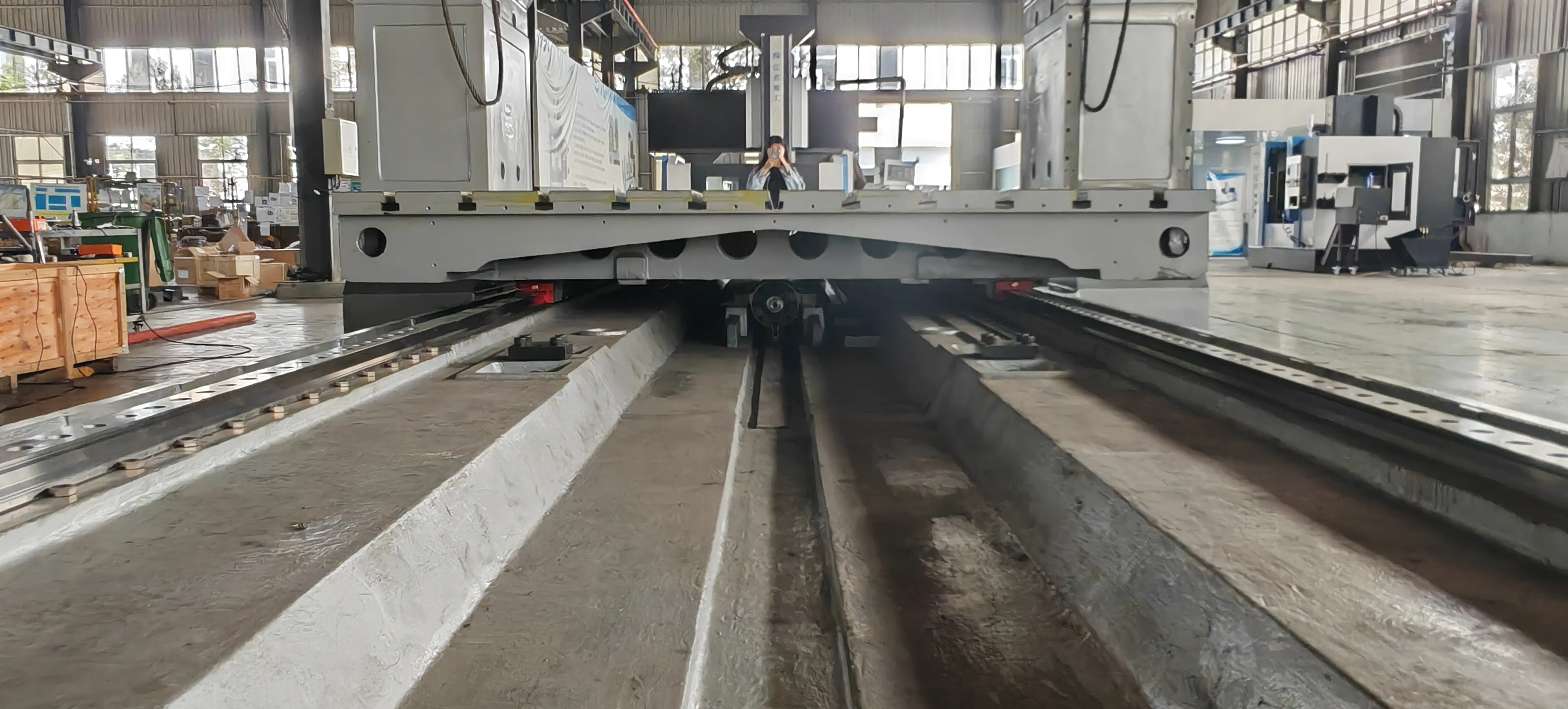
A gantry machining center (GMC) is a type of CNC machine where the worktable is fixed, and the cutting head moves along a gantry that spans the table. Unlike conventional machining centers, gantry machines excel at handling heavy and large-sized materials due to their robust structure. The machine in the image above shows a high-rigidity gantry frame, which is essential for minimizing vibrations and ensuring accuracy during heavy-duty milling.
Gantry machining centers are often used for operations such as:
Large mold machining
Aerospace components manufacturing
Automotive body parts
Shipbuilding structures
Their large working area and high load capacity make them ideal for industries requiring both precision and power.
2. Key Considerations When Selecting a Heavy-Duty Gantry CNC Machine
Choosing the right gantry machining center involves evaluating several critical parameters:
a. Machine Rigidity and Frame Construction
The rigidity of the machine frame is the most crucial factor for heavy-duty work. High rigidity reduces vibrations, improves surface finish, and prolongs tool life. Machines with thick, high-quality castings, reinforced beams, and a sturdy gantry structure, like the one shown in the image, are best suited for demanding milling operations.
Look for features such as:
Ribbed or hollow beam structures to reduce weight while maintaining strength
High-tensile cast iron or steel components
Vibration-damping design
b. Worktable Size and Load Capacity
The size of the worktable determines the maximum dimensions of workpieces you can machine. For heavy-duty work, a large, flat, and precisely leveled table is essential. The machine should also support significant weight without compromising accuracy. Ensure that the worktable and gantry rails are rated for the expected load.
c. Linear Guideways and Spindle Options
Precision in motion depends on the type of linear guideways and spindle configuration:
Box Guideways vs. Linear Roller Guides: Box guideways provide higher rigidity for heavy cuts, whereas linear roller guides offer higher speed and smoother motion. For heavy-duty applications, box guideways are often preferred.
High-Power Spindles: For machining hard metals, select a spindle with sufficient power (10–30 kW or more) and torque, and ensure it can maintain consistent RPM under heavy load.
d. Travel Range and Z-Axis Clearance
Ensure that the gantry machine provides adequate travel in X, Y, and Z axes to accommodate large parts. Sufficient Z-axis clearance is especially important for deep cavity milling or tall workpieces. Some gantry machines allow adjustable table height or extended Z-axis travel to handle complex components.
e. Automation Features
Modern gantry machining centers often come with advanced automation options:
Automatic tool changers (ATC) for faster tool replacement
CNC control systems with intuitive interfaces
Integration with CAD/CAM software for complex machiningAutomated lubrication systems and coolant pumps for maintenance efficiency
Automation not only improves productivity but also reduces operator errors.
f. Accuracy and Repeatability
Accuracy is paramount in heavy-duty work. Machines should have high repeatability (typically ±0.005 mm or better) and minimal thermal deformation. Check manufacturer specifications for positioning accuracy, repeatability, and thermal compensation features.
3. Maintenance and Service Considerations
Investing in a gantry machining center also requires evaluating service support and maintenance:
Ease of Access: Check that the machine design allows easy access to linear guides, spindles, and other components for maintenance.
Spare Parts Availability: Ensure that replacement parts are available locally or through reliable channels.
Technical Support: A responsive technical team is crucial for minimizing downtime.
A well-maintained machine will deliver consistent performance over many years, making maintenance considerations just as important as technical specifications.
4. Applications of Heavy-Duty Gantry Machining Centers
Heavy-duty gantry machines are widely used in industries where precision meets size:
Aerospace: Machining large components such as wing ribs, fuselage sections, and turbine casings.
Automotive: Milling die and mold parts, chassis components, and automotive panels.
Energy: Producing components for wind turbines, power generation equipment, and large pumps.
Shipbuilding: Cutting and shaping thick metal plates for hulls and structural components.
These applications demand machines that are not only robust but also capable of high-precision and repeatable results.
5. Conclusion
Selecting the right gantry machining center for heavy-duty work requires balancing size, rigidity, spindle power, accuracy, and automation features. The machine should be able to handle the maximum workpiece size and weight, maintain high precision under heavy cutting conditions, and integrate advanced automation for efficiency. As illustrated in the image, a robust gantry structure with high-rigidity guideways and a flat, heavy-duty table provides a reliable foundation for demanding industrial operations.
By carefully considering these factors, manufacturers can ensure long-term productivity, minimal downtime, and excellent machining results, making the right gantry machining center a critical investment for modern heavy-duty manufacturing.