
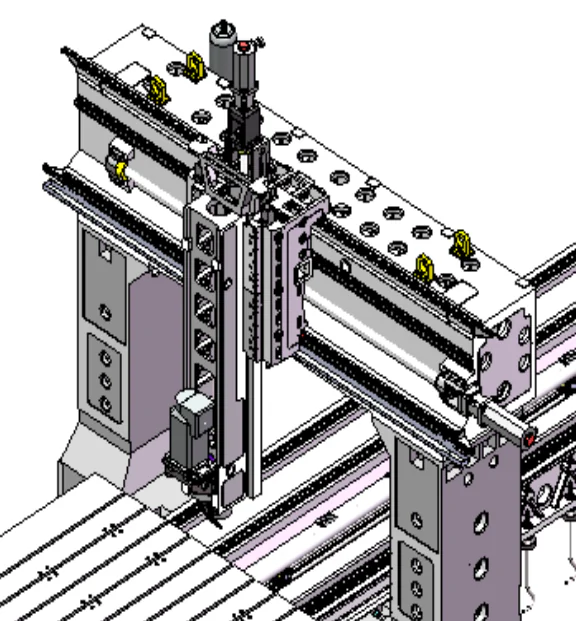
In the world of modern machine tools and automation, two types of guideways are dominating high‑precision motion systems — Box Guideways and Linear Guideways. Manufacturers, engineers, and end users constantly debate which one offers superior performance, durability, and cost‑effectiveness. This comprehensive analysis — backed by industry insights and trending Google search terms — aims to answer the critical question: which guideway is better for your application?
What are Guideways?
Guideways are the foundational components that guide linear motion in industrial machines such as CNC machining centers, milling machines, and automated robots. Their primary function is to ensure:
✔ Smooth motion
✔ High precision
✔ Rigidity and stability
✔ Long‑term durability
Two mainstream types exist:
Box Guideways
Linear Guideways
Both serve the same purpose but differ significantly in structure, performance, and cost.
Box Guideway: Structural Strength and Stability
Box guideways — also called box ways or dovetail guideways — consist of large cast or machined surfaces that slide against each other. This traditional design has been widely used in heavy machine tools for decades.
Key Features
Massive contact area between sliding surfaces
Exceptional load capacity
High static rigidity
Excellent resistance to cutting forces in heavy machining
Advantages
Superior rigidity and stiffness — ideal for heavy milling, boring, and grinding.
High resistance to vibration and deformation — suitable for sloppy cuts and interruption loads.
Self‑lubricating capabilities when equipped with embedded channels.
Low sensitivity to contamination — less affected by chips and debris.
Limitations
Not suitable for ultra high precision applications.
Higher friction leading to wear and more frequent maintenance.
Lower linear motion speed than precision linear guide rails.
Linear Guideway: Precision and Speed
Linear guideways — often referred to as linear rails or recirculating ball guides — are advanced motion systems featuring rolling elements (balls or rollers) between rails and sliders.
Key Features
Rolling contact mechanism
High dynamic accuracy
Low friction
Support for high feed rates
Advantages
High precision and accuracy — ideal for precision CNC machining and inspection equipment.
Smooth motion with minimal friction — enables high‑speed operations.
Long service life with proper lubrication.
Excellent support for multi‑axis CNC systems.
Limitations
Can be sensitive to contamination — requires clean environments and protective seals.
Initial cost is usually higher than box guide systems.
Load capacity may be lower unless oversized rails are used.
Choose Box Guideway If:
✔ You need high cutting rigidity
✔ The machine operates under heavy load
✔ Chip contamination is unavoidable
✔ Long‑term durability and low susceptibility to debris are priorities
Typical Industries & Machines:
Heavy milling machines
Grinding machines
Boring centers
Large gantry systems
Choose Linear Guideway If:
✔ Precision and accuracy are critical
✔ High feed rates and dynamic performance are required
✔ The system is for fine machining or robotics
✔ Smooth long‑term operation matters
Typical Industries & Machines:
Precision CNC machining
Medical device manufacturing
Semiconductor equipment
3D printers and automation
Conclusion
So, Box Guideway vs Linear Guideway — which is better?
Answer: It depends on your priorities.
👉 If your priority is rigidity and heavy load capacity, then Box Guideways excel.
👉 If your priority is precision, speed, and smooth motion, then Linear Guideways are the better choice.
Smart manufacturing often uses a combination of both, optimizing per axis and per machine requirement.