
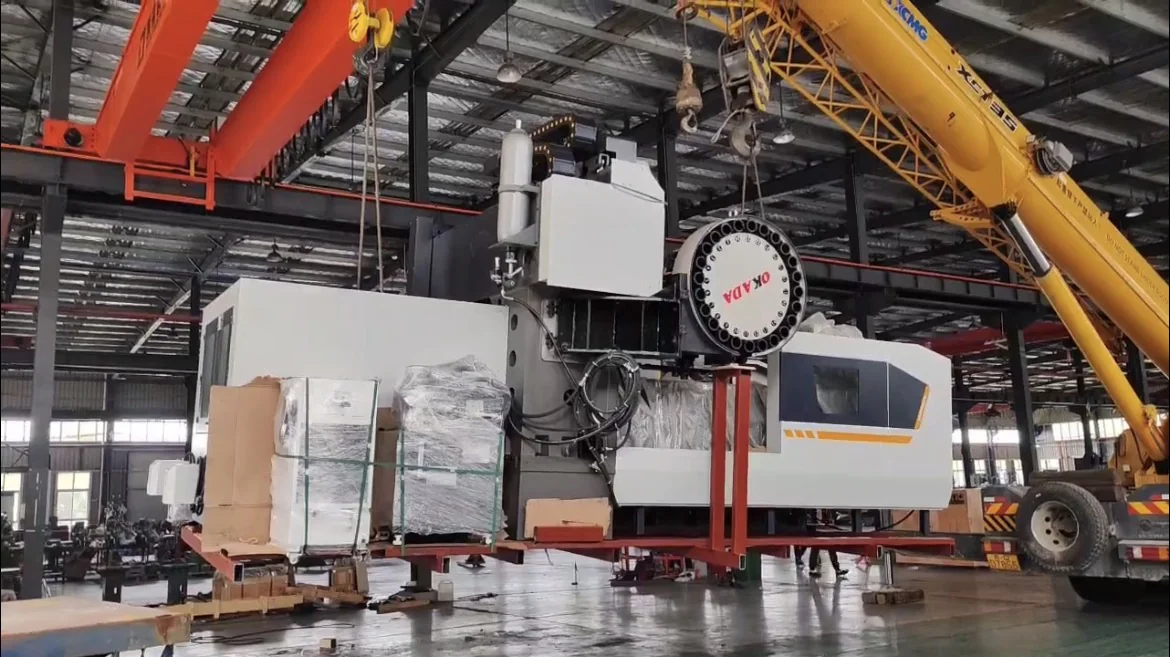
In today’s rapidly evolving manufacturing industry, the demand for high precision machining, large-scale processing, and automation efficiency continues to rise. As shown in the image above, a heavy-duty gantry CNC machine is being installed in a modern workshop—highlighting the increasing importance of these machines in sectors such as aerospace, automotive, mold making, and energy equipment.
Choosing the right gantry CNC machine is not just about purchasing equipment—it is a strategic investment that directly impacts productivity, machining quality, and long-term return on investment (ROI). This article explores the key factors buyers must consider when selecting a gantry CNC machining center.
1. Workpiece Size and Machine Travel Capacity
One of the most critical factors is the work envelope—the maximum size of the material the machine can handle. Gantry CNC machines are specifically designed for large-format machining, making them ideal for oversized components such as steel plates, molds, and structural parts.
Buyers should carefully evaluate:
-
X, Y, Z axis travel distances
-
Maximum load capacity
-
Table size and configuration
A larger travel range increases flexibility and allows manufacturers to process bigger and more complex parts efficiently .
2. Machine Rigidity and Structural Design
The rigidity of the gantry structure directly determines machining accuracy and stability. High-quality machines typically use cast iron or stress-relieved steel frames to minimize vibration and thermal deformation.
A robust structure ensures:
-
Better surface finish
-
Reduced tool wear
-
Consistent accuracy during heavy cutting
The gantry design provides superior stability when machining large workpieces, maintaining precision even under high cutting loads .
3. Spindle Power and Speed Performance
The spindle is the core of any CNC machine. When choosing a gantry CNC machine, consider:
-
Spindle power (kW)
-
Maximum speed (RPM)
-
Torque capability
For heavy-duty metal cutting, higher spindle power is essential, while high-speed spindles are better for fine finishing operations. Industrial machines often feature spindles ranging from 7.5 kW to 22 kW or more .
4. Precision, Accuracy, and Repeatability
Precision is a defining factor in CNC machining. A high-performance gantry CNC machine should offer:
-
High positioning accuracy
-
Excellent repeatability (±0.02 mm or better)
-
Stable multi-axis synchronization
Accurate machines reduce errors, minimize scrap, and improve product consistency—especially important in industries requiring tight tolerances .
5. CNC Control System and Software Compatibility
The control system is the “brain” of the CNC machine. Leading systems include:
-
FANUC
-
Siemens
-
Heidenhain
Compatibility with CAD/CAM software such as Mastercam or SolidWorks is essential for seamless integration into existing production workflows. Advanced systems also support automation features like tool setting, simulation, and real-time monitoring .
6. Axis Configuration: 3-Axis vs 5-Axis
The number of axes determines machining flexibility:
-
3-axis machines: suitable for basic machining
-
5-axis machines: ideal for complex geometries and multi-surface machining
More axes reduce setup time and enable complex parts to be machined in a single operation .
7. Automation and Productivity Features
Modern gantry CNC machines are equipped with advanced automation features, including:
-
Automatic tool changers (ATC)
-
Tool measurement systems
-
Chip conveyors and coolant systems
These features significantly reduce downtime and improve production efficiency, making them essential for high-volume manufacturing .
8. Facility Requirements and Installation Conditions
Before purchasing, manufacturers must assess their facility:
-
Floor space availability
-
Foundation strength
-
Power supply capacity
Gantry CNC machines are large and heavy, requiring reinforced floors and sufficient installation space .
9. Budget and Long-Term ROI
While gantry CNC machines involve a high initial investment, they deliver long-term benefits:
-
Reduced labor costs
-
Higher productivity
-
Lower error rates
A well-chosen machine can significantly improve operational efficiency and provide strong ROI over time 。
10. After-Sales Support and Maintenance
Reliable technical support is crucial for minimizing downtime. Buyers should consider:
-
Availability of spare parts
-
Technical service response time
-
Training and support programs
Good after-sales service ensures the machine operates efficiently throughout its lifecycle.
Selecting the right gantry CNC machine requires a comprehensive evaluation of technical specifications, production needs, and long-term business goals. From machine rigidity and spindle performance to automation capabilities and ROI, every factor plays a vital role in ensuring success in modern manufacturing.
As global industries continue to move toward smart manufacturing and industrial automation, investing in the right gantry CNC solution is no longer optional—it is essential for staying competitive.