
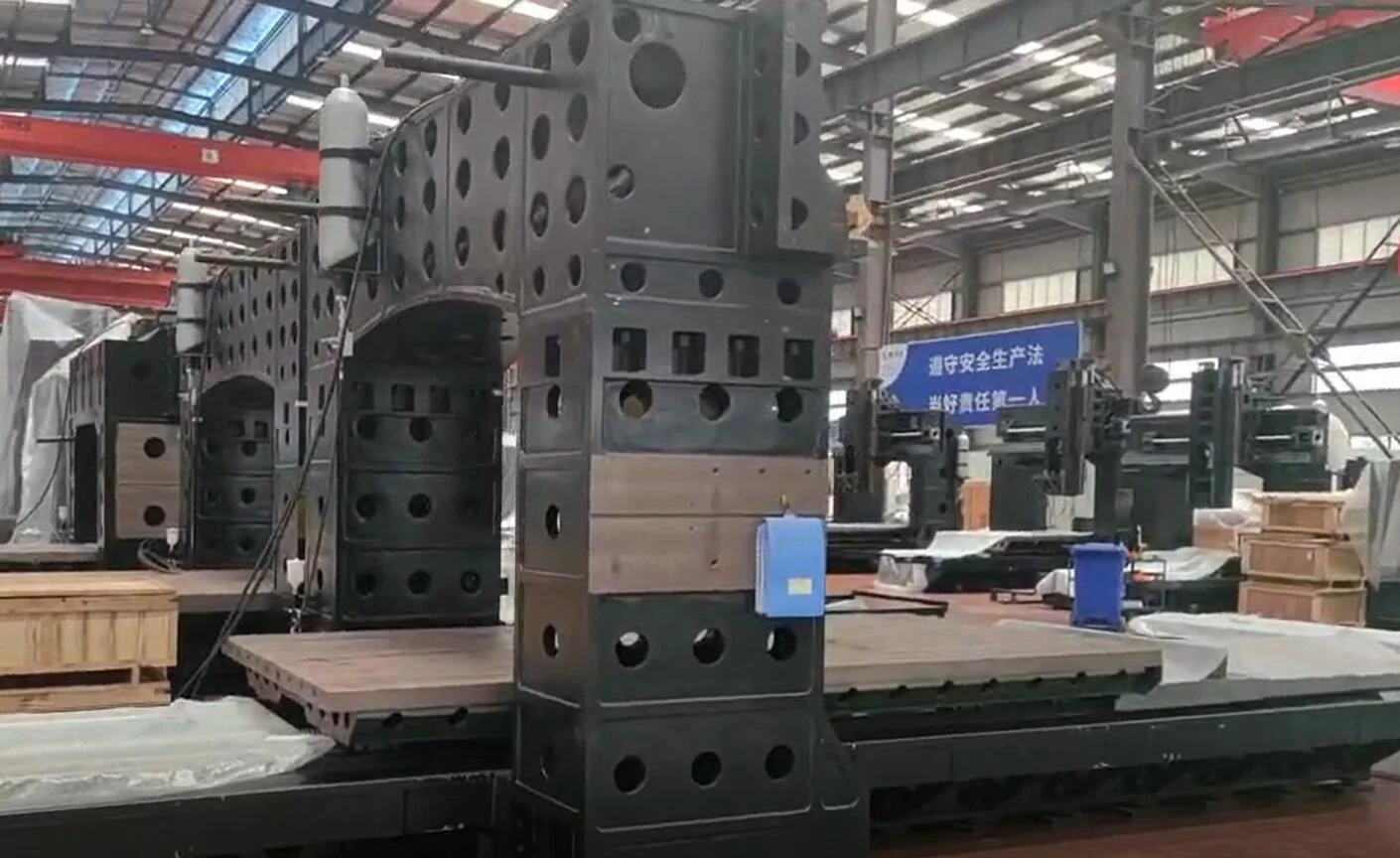
In an industrial era where precision, efficiency and durability define competitive advantage, Gantry CNC machines have become a backbone of modern metalworking and fabrication. Leading manufacturers are now emphasizing the integration of high‑rigidity casting structures in their gantry CNC systems to achieve a leap forward in performance and reliability.
The Industry Context
Gantry CNC machines are widely used in applications such as aerospace structural components, shipbuilding molds, wind turbine parts, and large automotive frames. These applications demand micron‑level precision, robust dynamic performance and long‑term operational stability. As markets increasingly demand higher throughput and tighter tolerances, machine tool designers must overcome structural limitations inherent in traditional welded or fabricated frames.
One key solution is the implementation of high‑rigidity castings — massive, singular components made from optimized iron or steel alloys and processed using advanced metallurgical control. This approach significantly enhances the core mechanical properties of the gantry structure.
What Makes High‑Rigidity Casting So Important?
High‑rigidity castings provide three major engineering advantages:
- Superior Structural Stability
A large casting has fewer joints, welds, and connections compared to fabricated frames. Every weld or bolt is a potential source of stress concentration, distortion, or long‑term fatigue. By using one‑piece casting, the gantry frame can resist twisting and bending forces during heavy cutting with far greater effectiveness. - Vibration Damping and Machining Accuracy
Cast iron, especially when fine‑tuned with graphite microstructures or other damping materials, exhibits excellent vibration absorption. In gantry CNC milling — especially in heavy duty milling and high‑feed machining — vibration control directly translates to surface finish quality and extended tool life. - Enhanced Dynamic Response
When a machine changes direction or accelerates rapidly, the gantry structure must handle significant inertial loads. High‑rigidity castings reduce deflection, enabling tighter CNC feedback control loops and more precise path tracking.
Gantry CNC Meets High‑Rigidity Casting
- High‑Precision Alignment — By casting the gantry columns and crossbeam as one, alignment accuracy is preserved even after years of heavy usage.
- Longer Life Cycle — Reduced fatigue and enhanced wear resistance lengthen machine life.
- Better Machining Results — With greater rigidity and vibration control, the machines achieve tighter tolerances and smoother surface finishes on heavy parts.
Why This Matters for Manufacturers
Manufacturers across aerospace, automotive and energy sectors are increasingly choosing gantry CNC machines with high‑rigidity castings because:
- They enable precision machining of large parts with minimal post‑processing.
- They support industrial automation and integration with robotic loading systems.
- They reduce maintenance costs and improve machine uptime.
Moreover, the advent of Industry 4.0 digital controls and smart predictive maintenance systems makes structural stability even more critical. Sensors mounted on the gantry can detect stress and temperature in real time and adjust motion paths, further enhancing accuracy and performance.
Expert Opinions
Dr. Alan Zhao, a machine tool design specialist, notes, “The shift toward high‑rigidity castings in gantry CNC reflects a fundamental improvement in machine dynamics. For large‑scale machining, rigidity isn’t optional — it’s necessary.”
Catherine Lee, production manager at a wind turbine supplier, adds: “Since upgrading to gantry CNC machines with cast frames, we’ve seen a significant reduction in scrap rates and rework times. The consistency and repeatability are unmatched.”
Future Developments
Looking ahead, machine tool manufacturers are exploring hybrid cast and additive manufacturing structures, advanced composite casting materials, and thermal compensation systems to further optimize gantry performance. These innovations are expected to launch a new wave of high‑precision, high‑rigidity CNC architectures.
In conclusion, the adoption of high‑rigidity casting in gantry CNC machines marks a pivotal moment in precision manufacturing technologies. As industries strive for efficiency, reliability and precision, this structural improvement promises to revolutionize how heavy and complex parts are machined — and how industrial competitiveness is measured.